Sunday, July 22, 2018

Omnicom Group Inc. (OMC) Director Sells $33,259.50 in Stock

Omnicom Group Inc. (NYSE:OMC) Director Linda Johnson Rice sold 475 shares of Omnicom Group stock in a transaction on Thursday, July 19th. The shares were sold at an average price of $70.02, for a total transaction of $33,259.50. Following the completion of the transaction, the director now directly owns 7,966 shares of the company’s stock, valued at approximately $557,779.32. The transaction was disclosed in a legal filing with the Securities & Exchange Commission, which is accessible through this link.

OMC stock opened at $68.18 on Friday. The stock has a market cap of $15.30 billion, a PE ratio of 12.58, a P/E/G ratio of 2.18 and a beta of 1.15. The company has a debt-to-equity ratio of 1.70, a current ratio of 0.89 and a quick ratio of 0.81. Omnicom Group Inc. has a 52 week low of $65.32 and a 52 week high of $83.34.

Get Omnicom Group alerts:

Omnicom Group (NYSE:OMC) last released its earnings results on Tuesday, July 17th. The business services provider reported $1.60 EPS for the quarter, topping analysts’ consensus estimates of $1.54 by $0.06. The business had revenue of $3.86 billion during the quarter, compared to analysts’ expectations of $3.88 billion. Omnicom Group had a net margin of 7.45% and a return on equity of 40.82%. The company’s quarterly revenue was up 1.8% on a year-over-year basis. During the same quarter in the previous year, the company earned $1.40 earnings per share. equities analysts anticipate that Omnicom Group Inc. will post 5.58 EPS for the current fiscal year.

The firm also recently declared a quarterly dividend, which will be paid on Wednesday, October 10th. Investors of record on Friday, September 21st will be given a dividend of $0.60 per share. The ex-dividend date is Thursday, September 20th. This represents a $2.40 dividend on an annualized basis and a yield of 3.52%. Omnicom Group’s payout ratio is presently 47.06%.

A number of research firms have weighed in on OMC. Zacks Investment Research raised shares of Omnicom Group from a “sell” rating to a “hold” rating in a report on Friday, July 6th. BMO Capital Markets reaffirmed a “buy” rating and issued a $85.00 price objective on shares of Omnicom Group in a report on Thursday. Wells Fargo & Co reaffirmed a “market perform” rating and issued a $75.00 price objective (down previously from $80.00) on shares of Omnicom Group in a report on Tuesday, July 17th. ValuEngine raised shares of Omnicom Group from a “sell” rating to a “hold” rating in a research note on Thursday, July 12th. Finally, Morgan Stanley cut their target price on shares of Omnicom Group from $76.00 to $73.00 and set an “underweight” rating for the company in a research note on Wednesday, May 23rd. Five analysts have rated the stock with a sell rating, nine have issued a hold rating and three have assigned a buy rating to the company’s stock. The company presently has a consensus rating of “Hold” and a consensus target price of $78.08.

A number of institutional investors and hedge funds have recently bought and sold shares of OMC. Summit Trail Advisors LLC boosted its position in Omnicom Group by 6,646.4% during the first quarter. Summit Trail Advisors LLC now owns 1,862,479 shares of the business services provider’s stock worth $1,862,000 after acquiring an additional 1,834,872 shares during the last quarter. Ceredex Value Advisors LLC acquired a new position in Omnicom Group during the first quarter worth about $80,364,000. Schroder Investment Management Group boosted its position in Omnicom Group by 30.2% during the first quarter. Schroder Investment Management Group now owns 3,252,664 shares of the business services provider’s stock worth $236,371,000 after acquiring an additional 753,845 shares during the last quarter. Morningstar Investment Services LLC acquired a new position in Omnicom Group during the first quarter worth about $41,971,000. Finally, Kiltearn Partners LLP boosted its position in Omnicom Group by 38.6% during the first quarter. Kiltearn Partners LLP now owns 1,860,099 shares of the business services provider’s stock worth $135,118,000 after acquiring an additional 517,700 shares during the last quarter.

About Omnicom Group

Omnicom Group Inc, together with its subsidiaries, provides advertising, marketing, and corporate communications services. The company offers a range of services in the areas of advertising, customer relationship management, public relations, and healthcare. Its services comprises advertising, branding, content marketing, corporate social responsibility consulting, crisis communication, custom publishing, data analytics, database management, digital/direct marketing, digital transformation, financial/corporate business-to-business advertising, graphic arts/digital imaging, healthcare marketing and communications, and instore design services.

Recommended Story: What kind of dividend yield to CEF’s pay?

Saturday, July 21, 2018

Air Lease Corp (AL) Receives Average Rating of “Hold” from Brokerages

Air Lease Corp (NYSE:AL) has earned a consensus recommendation of “Hold” from the twelve analysts that are covering the stock, MarketBeat.com reports. One research analyst has rated the stock with a sell recommendation, five have assigned a hold recommendation and six have given a buy recommendation to the company. The average 1 year target price among brokers that have covered the stock in the last year is $53.81.

AL has been the topic of a number of analyst reports. Zacks Investment Research cut shares of Air Lease from a “buy” rating to a “hold” rating in a research report on Tuesday, March 27th. Morgan Stanley lifted their target price on shares of Air Lease from $47.00 to $48.00 and gave the stock an “equal weight” rating in a research report on Thursday, April 12th. Finally, ValuEngine cut shares of Air Lease from a “buy” rating to a “hold” rating in a research report on Wednesday, May 23rd.

Get Air Lease alerts:

Shares of Air Lease traded up $0.84, reaching $43.85, during mid-day trading on Friday, according to MarketBeat.com. 6,003 shares of the company were exchanged, compared to its average volume of 588,971. Air Lease has a 52 week low of $38.46 and a 52 week high of $50.70. The company has a debt-to-equity ratio of 2.34, a quick ratio of 0.97 and a current ratio of 0.97. The company has a market capitalization of $4.40 billion, a P/E ratio of 11.96, a P/E/G ratio of 1.30 and a beta of 1.74.

Air Lease (NYSE:AL) last posted its quarterly earnings data on Thursday, May 10th. The transportation company reported $1.00 earnings per share (EPS) for the quarter, topping analysts’ consensus estimates of $0.95 by $0.05. Air Lease had a net margin of 50.86% and a return on equity of 11.03%. The company had revenue of $381.20 million during the quarter, compared to the consensus estimate of $379.74 million. During the same period in the previous year, the firm posted $1.33 EPS. The firm’s revenue was up 5.8% compared to the same quarter last year. analysts forecast that Air Lease will post 4.51 EPS for the current fiscal year.

The firm also recently announced a quarterly dividend, which was paid on Tuesday, July 10th. Investors of record on Tuesday, June 5th were given a $0.10 dividend. This represents a $0.40 dividend on an annualized basis and a yield of 0.91%. The ex-dividend date was Monday, June 4th. Air Lease’s payout ratio is presently 10.96%.

In other Air Lease news, EVP John D. Poerschke sold 12,144 shares of the business’s stock in a transaction dated Monday, June 4th. The shares were sold at an average price of $44.98, for a total value of $546,237.12. Following the transaction, the executive vice president now owns 43,500 shares in the company, valued at $1,956,630. The transaction was disclosed in a filing with the Securities & Exchange Commission, which is available through this hyperlink. Also, EVP Marc H. Baer sold 5,000 shares of the business’s stock in a transaction dated Thursday, June 7th. The shares were sold at an average price of $45.52, for a total transaction of $227,600.00. Following the completion of the transaction, the executive vice president now owns 132,891 shares in the company, valued at approximately $6,049,198.32. The disclosure for this sale can be found here. In the last quarter, insiders sold 44,144 shares of company stock worth $1,990,187. 9.32% of the stock is owned by corporate insiders.

Several hedge funds have recently added to or reduced their stakes in the business. Boston Partners boosted its stake in shares of Air Lease by 2.9% during the 1st quarter. Boston Partners now owns 8,555,116 shares of the transportation company’s stock valued at $364,619,000 after purchasing an additional 239,216 shares in the last quarter. BlackRock Inc. boosted its stake in shares of Air Lease by 1.4% during the 1st quarter. BlackRock Inc. now owns 4,024,171 shares of the transportation company’s stock valued at $171,509,000 after purchasing an additional 54,450 shares in the last quarter. Northern Trust Corp boosted its stake in shares of Air Lease by 1.0% during the 1st quarter. Northern Trust Corp now owns 1,127,392 shares of the transportation company’s stock valued at $48,050,000 after purchasing an additional 11,507 shares in the last quarter. Klingenstein Fields & Co. LLC boosted its stake in shares of Air Lease by 3.0% during the 1st quarter. Klingenstein Fields & Co. LLC now owns 868,182 shares of the transportation company’s stock valued at $37,002,000 after purchasing an additional 24,993 shares in the last quarter. Finally, Cooke & Bieler LP boosted its stake in shares of Air Lease by 4.6% during the 1st quarter. Cooke & Bieler LP now owns 588,900 shares of the transportation company’s stock valued at $25,099,000 after purchasing an additional 25,720 shares in the last quarter. Hedge funds and other institutional investors own 84.98% of the company’s stock.

Air Lease Company Profile

Air Lease Corporation, an aircraft leasing company, engages in the purchase and leasing of commercial jet transport aircraft to airlines worldwide. The company also sells aircraft from its operating lease portfolio to third parties, including other leasing companies, financial services companies, and airlines.

Featured Story: Book Value Of Equity Per Share �� BVPS Explained

Analyst Recommendations for Air Lease (NYSE:AL)

Friday, July 20, 2018

Hot Medical Stocks To Invest In Right Now

tags:CHDN,HCCI,BPT,FBP,

Envestnet Asset Management Inc. reduced its stake in Dexcom (NASDAQ:DXCM) by 22.2% during the 1st quarter, according to the company in its most recent Form 13F filing with the Securities and Exchange Commission. The institutional investor owned 4,404 shares of the medical device company’s stock after selling 1,257 shares during the period. Envestnet Asset Management Inc.’s holdings in Dexcom were worth $327,000 at the end of the most recent reporting period.

Several other hedge funds and other institutional investors also recently made changes to their positions in DXCM. Bridger Management LLC acquired a new stake in shares of Dexcom in the fourth quarter valued at $48,826,000. OppenheimerFunds Inc. increased its holdings in Dexcom by 96.5% in the fourth quarter. OppenheimerFunds Inc. now owns 1,495,535 shares of the medical device company’s stock valued at $85,829,000 after buying an additional 734,325 shares during the last quarter. AXA increased its holdings in Dexcom by 44.9% in the fourth quarter. AXA now owns 1,911,206 shares of the medical device company’s stock valued at $109,684,000 after buying an additional 592,275 shares during the last quarter. Neuberger Berman Group LLC increased its holdings in Dexcom by 501.9% in the first quarter. Neuberger Berman Group LLC now owns 637,416 shares of the medical device company’s stock valued at $47,271,000 after buying an additional 531,513 shares during the last quarter. Finally, William Blair Investment Management LLC increased its holdings in Dexcom by 24.3% in the fourth quarter. William Blair Investment Management LLC now owns 1,762,619 shares of the medical device company’s stock valued at $101,157,000 after buying an additional 344,294 shares during the last quarter.

Hot Medical Stocks To Invest In Right Now: Churchill Downs, Incorporated(CHDN)

Advisors' Opinion:
  • [By ]

    Churchill Downs Inc (Nasdaq: CHDN) is known for its horse racing track in Kentucky but also owns nine casinos, four racetracks, a network of off-track betting sites and an online horse racing betting site. The individual casinos span eight states including population centers in New York, California, and Florida, and could all expand to sports betting as well.

  • [By Logan Wallace]

    Churchill Downs Incorporated (NASDAQ:CHDN)’s share price reached a new 52-week high and low during mid-day trading on Tuesday . The stock traded as low as $301.60 and last traded at $297.40, with a volume of 6596 shares trading hands. The stock had previously closed at $292.50.

  • [By ]

    Churchill Downs (CHDN) : "This has been a big winner for a long time. I'd wait for a dip, then buy some."

    Devon Energy (DVN) : "They shot the lights out. They've got growth and are bigger than ever."

  • [By Lisa Levin] Gainers Genprex, Inc. (NASDAQ: GNPX) shares gained 86.76 percent to close at $11.00 on Thursday. Comstock Resources, Inc. (NYSE: CRK) shares climbed 47.06 percent to close at $7.00 after the company disclosed a deal with Arkoma Drilling L.P. and Williston Drilling, L.P. to buy oil & gas properties in North Dakota. Comstock announced withdrawal of tender offers for outstanding secured notes. Ceridian HCM Holding Inc. (NASDAQ: CDAY) gained 41.86 percent to close at $31.21. MarineMax, Inc. (NYSE: HZO) shares rose 26.5 percent to close at $22.20 as the company posted upbeat Q2 results and raised its FY18 outlook. Concord Medical Services Holdings Limited (NYSE: CCM) jumped 24.92 percent to close at $4.06. Mattersight Corporation (NASDAQ: MATR) shares climbed 23.26 percent to close at $2.65 after the company agreed to be purchased by NICE Ltd. Chipotle Mexican Grill, Inc. (NYSE: CMG) rose 24.44 percent to close at $422.50 as the company reported stronger-than-expected results for its first quarter on Wednesday. Ultra Clean Holdings, Inc. (NASDAQ: UCTT) gained 17.75 percent to close at $18.64 following upbeat Q1 earnings. PCM, Inc. (NASDAQ: PCMI) rose 16.59 percent to close at $12.30 following Q1 results. Zymeworks Inc. (NASDAQ: ZYME) rose 16.06 percent to close at $15.25. Alexion Pharmaceuticals, Inc. (NASDAQ: ALXN) shares climbed 14.5 percent to close at $121.42 as the company posted reported Q1 beat And raised FY18 outlook. Advanced Micro Devices, Inc. (NASDAQ: AMD) shares gained 13.7 percent to close at $11.04 as the company reported upbeat results for its first quarter. Axsome Therapeutics, Inc. (NASDAQ: AXSM) rose 13.21 percent to close at $3.00 after the company disclosed a positive outcome of the interim analysis of STRIDE-1 Phase 3 trial of AXS-05 in treatment resistant depression. O'Reilly Automotive, Inc. (NASDAQ: ORLY) jumped 13.06 percent to close at $257.40 following upbeat Q1 profit. BioTelemetry,
  • [By ]

    In the Lightning Round, Cramer was bullish on PayPal (PYPL) , Wyndham Worldwide (WYN) , Churchill Downs (CHDN) , Devon Energy (DVN) , Discovery Communications (DISCA) and Cypress Semiconductor (CY) .

  • [By Shane Hupp]

    Here are some of the media headlines that may have effected Accern Sentiment’s analysis:

    Get Churchill Downs alerts: Churchill Downs Incorporated (CHDN) Receives Consensus Recommendation of “Buy” from Brokerages (americanbankingnews.com) VIDEO: Churchill CEO Cartstanjen discusses the future of sports betting (bizjournals.com) 2018 Preakness Stakes Preview: Justify Aims For The Triple Crown (finance.yahoo.com) Churchill Downs CEO on future of sports betting (finance.yahoo.com)

    A number of research firms recently weighed in on CHDN. Telsey Advisory Group upped their price target on Churchill Downs from $265.00 to $290.00 and gave the stock a “market perform” rating in a report on Monday, May 7th. ValuEngine raised Churchill Downs from a “hold” rating to a “buy” rating in a report on Friday, April 27th. Zacks Investment Research cut Churchill Downs from a “buy” rating to a “hold” rating in a report on Tuesday, March 20th. Finally, BidaskClub raised Churchill Downs from a “buy” rating to a “strong-buy” rating in a report on Tuesday, April 24th. Three analysts have rated the stock with a hold rating, two have issued a buy rating and one has given a strong buy rating to the company. Churchill Downs currently has an average rating of “Buy” and a consensus price target of $260.50.

Hot Medical Stocks To Invest In Right Now: Heritage-Crystal Clean, Inc.(HCCI)

Advisors' Opinion:
  • [By Max Byerly]

    Get a free copy of the Zacks research report on Heritage-Crystal Clean (HCCI)

    For more information about research offerings from Zacks Investment Research, visit Zacks.com

  • [By Max Byerly]

    Get a free copy of the Zacks research report on Heritage Crystal Clean (HCCI)

    For more information about research offerings from Zacks Investment Research, visit Zacks.com

Hot Medical Stocks To Invest In Right Now: BP Prudhoe Bay Royalty Trust(BPT)

Advisors' Opinion:
  • [By Dan Caplinger]

    The stock market had a tumultuous session on Wednesday, as major benchmarks started the day weak but bounced back in the afternoon. Investors weren't happy with the current state of geopolitical uncertainty, with trade disputes threatening to become larger problems than ever. But the release of the minutes of the latest meeting of the Federal Reserve's monetary policy committee convinced many that the central bank will be slow to do lasting damage to the economic expansion, remaining measured in the pace of its interest rate increases. Moreover, some companies had good news that sent their shares higher. Tiffany (NYSE:TIF), BP Prudhoe Bay Royalty Trust (NYSE:BPT), and Ralph Lauren (NYSE:RL) were among the best performers on the day. Here's why they did so well.

  • [By Joseph Griffin]

    News headlines about BP Prudhoe Bay Royalty Trust (NYSE:BPT) have been trending somewhat positive this week, Accern Sentiment reports. Accern identifies negative and positive news coverage by monitoring more than 20 million blog and news sources in real time. Accern ranks coverage of publicly-traded companies on a scale of negative one to positive one, with scores closest to one being the most favorable. BP Prudhoe Bay Royalty Trust earned a daily sentiment score of 0.09 on Accern’s scale. Accern also gave media headlines about the oil and gas company an impact score of 46.2072909143413 out of 100, meaning that recent news coverage is somewhat unlikely to have an impact on the stock’s share price in the next several days.

  • [By Sean Williams]

    As a case in point, consider BP Prudhoe Bay Royalty Trust (NYSE:BPT), which is currently paying out an extrapolated $5.10 a year, based on the $1.275 per share it divvied out in April. This is good enough for a better than 17% annual yield, albeit it should be noted that the Trust's payout differs each quarter depending on its royalty revenue and cash earnings.�

Hot Medical Stocks To Invest In Right Now: First BanCorp.(FBP)

Advisors' Opinion:
  • [By Logan Wallace]

    Press coverage about First BanCorp (NYSE:FBP) has trended somewhat positive this week, according to Accern. The research firm ranks the sentiment of media coverage by monitoring more than twenty million blog and news sources in real time. Accern ranks coverage of public companies on a scale of negative one to one, with scores closest to one being the most favorable. First BanCorp earned a daily sentiment score of 0.17 on Accern’s scale. Accern also assigned news headlines about the bank an impact score of 47.5369094230747 out of 100, meaning that recent media coverage is somewhat unlikely to have an effect on the stock’s share price in the near term.

  • [By Logan Wallace]

    Prudential Financial Inc. lessened its position in First BanCorp (NYSE:FBP) by 16.5% in the first quarter, Holdings Channel reports. The institutional investor owned 906,869 shares of the bank’s stock after selling 179,820 shares during the period. Prudential Financial Inc.’s holdings in First BanCorp were worth $5,459,000 at the end of the most recent quarter.

Friday, July 13, 2018

Under the Radar: The Supreme Court Decision Brett Kavanaugh Is Most Likely to Overrule

By William A. Galston of the Brookings Institution

Brett Kavanaugh, President Trump’s nominee to replace retiring Supreme Court Justice Anthony Kennedy, is less likely to override Roe v. Wade than to rein in the agencies at the heart of the modern administrative state. Here’s why:

During the 1930s, President Franklin Roosevelt proposed��and the Congress ratified��the creation of new agencies to help implement the expansive legislation at the heart of the New Deal. After years of bipartisan fact-finding and deliberation, Congress codified the activities of the agencies in the Administrative Procedure Act (1946), which sets forth the processes through which regulations and other forms of legislative implementation may proceed.

This statute gives formal and, in the eyes of many, quasi-constitutional status to the modern administrative state. It also raises enduring questions about the relationship between agencies and the three constitutionally established branches of government. For example, when an agency claims authority to promulgate a regulation, who has the power to limit the exercise of this authority? When someone takes an agency to court asserting that a regulation lacks legislative justification, what standards should the courts use to weigh this claim?

Nearly a quarter of a century ago, in Chevron v. NRDC (1984), the Supreme Court offered a clear answer: unless Congress has spoken clearly on the subject of a regulation, the courts should defer to an agency’s decision as long as it is reasonable, even if the courts would have reached a different interpretation. Whenever a statute is ambiguous, the agency enjoys wide discretion. Anything that is not unreasonable lies in the zone of the permissible.

As both an appellate judge and legal commentator, Mr. Kavanaugh has been critical of this decision. In a 2016 article in the Harvard Law Review, he states that Chevron “has no basis in the Administrative Procedure Act” and represents “an atextual invention by courts.” In fact, he adds, the decision is “nothing more than a judicially orchestrated shift of power from Congress to the Executive Branch.”

Mr. Kavanaugh objects not only to the jurisprudence underlying the decision, but also to its consequences. “From my more than five years of experience in the White House,” he declares, “I can confidently claim that Chevron encourages the Executive Branch (whichever party controls it) to be extremely aggressive in seeking to squeeze its policy goals into ill-fitting statutory authorizations and restraints.”

In short, this decision unleashes presidents’ incentives to push their executive authority to the limit, often beyond. The reason, Kavanaugh says, is rooted in today’s partisan and legislative gridlock: “Presidents run for office on policy agendas and it is often difficult to get those agendas through Congress. So it is no surprise that presidents and agencies often will do whatever they can within existing statutes. And with Chevron in the mix, that inherent aggressiveness is amped up significantly.”

Because Kavanaugh sees this decision as a source of constitutional distortion, he is determined to limit its scope. To this end, his Harvard Law Review article offers three proposals. First: keeping with a proposal first offered by Stephen Breyer before he joined the Court, and subsequently endorsed by the Court in King v. Burwell (2015), Chevron should not apply in cases involving questions of major significance. Second: as suggested in United States v. Mead (2001), Chevron should not apply unless Congress has delegated authority to the agency to make rules carrying the force of law and the agency is making rules pursuant to that authority.

Third (and here Kavanaugh breaks new ground): courts should hesitate to expand agency discretion by determining that statutes are ambiguous. Given the imperfections of language, a topic James Madison discusses in Federalist #37, most sentences will contain an element of indeterminacy. How can Congress limit the scope of agency discretion? Some judges will discern clarity where others see ambiguity. The idea of ambiguity is itself ambiguous. But if nearly everything can be deemed ambiguous, what’s the point of drafting legislation?

Kavanaugh proposes to escape this cul de sac by adopting a new presumption: when there is a high probability that a certain interpretation of the statute represents the best reading, the court should adopt this reading, even if the matter is not entirely free from doubt. The legislative will of Congress should prevail over executive power, at least when the courts are prepared to interpret statutes authoritatively.

Along with many conservatives, Kavanaugh believes that the administrative state has run amok, empowering policy judgments that lack statutory warrant and escape judicial review. And he has a plan, or perhaps two plans, to rein in runaway agencies. Whenever circumstances permit, he will interpret the scope of Chevron as narrowly as possible. And if the occasion presents itself, he may well vote to overrule it. Yes, the decision has the force of precedent. But if it lacks statutory authority, as Kavanaugh contends, the doctrine of stare decisis may not be enough to protect it.

A post-Chevron world would expand judicial power in the administrative sphere at the expense of both Congress and the executive. More regulations probably would fail judicial tests. The regulatory process, already more like a marathon than a sprint, would slow further. In response, Congress might work harder to make its legislative intentions clear, and the White House might work harder to remain within the four corners of congressional intent.

This article appeared originally at the Brookings website, along with links to other materials that may be of interest.

24/7 Wall St.
8 Top Picks From Credit Suisse With Implied Upside of 50% or More

Thursday, July 12, 2018

10 years ago: IndyMac collapses and starts a flood of bank failures

It was the moment the housing crisis hit home.

IndyMac, a California bank that had grown into one of the nation's largest mortgage lenders, failed 10 years ago Wednesday.

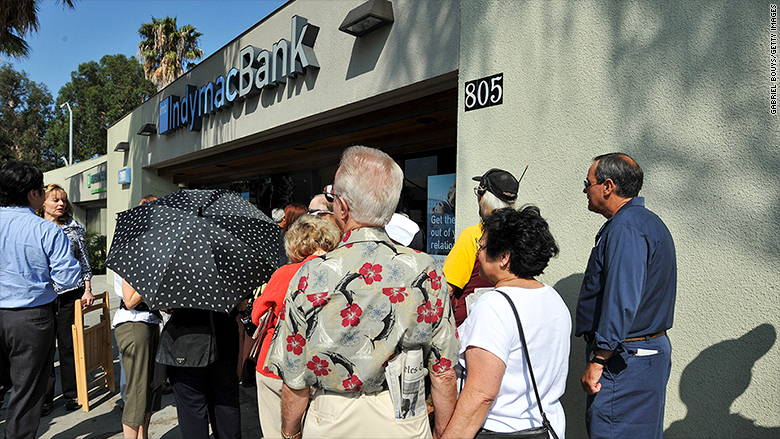
Even though most money in the bank was protected by the FDIC, the government agency that insures bank deposits, customers formed long lines outside IndyMac locations trying to withdraw their cash.

It was a scene reminiscent of the bank runs of the Great Depression. It was also a sign of things to come in the financial crisis.

In the year before IndyMac collapsed, only six banks had failed. In the year that followed, more than 10 times that many went under. By July 2011, more than 300 additional banks had failed, a rate of two per week. Rare was the Friday evening when regulators weren't seizing control of one more.

IndyMac wasn't the cause of the banking crisis. But it was the poster child.

For years, the overwhelming majority of homes in the United States had been purchased with mortgages that conformed to the strict underwriting rules of the two home loan giants, Fannie Mae and Freddie Mac.

But in the early 2000s, investors started looking for riskier loans for which borrowers would pay a higher interest rate.

Subprime loans went to borrowers with bad credit scores. IndyMac specialized in something different �� what became known as Alt-A mortgages. Those were initially loans to people who had good credit scores but couldn't prove a reliable stream of income, such as the self-employed.

indymac failure Customers line up to try to get their money after the failure of IndyMac in July 2008.

By 2005 and 2006, for the first and only time, the dollar value of non-traditional loans such as subprime and Alt-A mortgages overtook the safer loans that Fannie and Freddie would accept.

IndyMac rode that boom.

The value of the loans it made more than tripled, from $22 billion in 2003 to nearly $90 billion three years later. A relatively small bank became the ninth-largest mortgage lender in the country, according to data from Inside Mortgage Finance.

IndyMac was growing fast by making loans to more and more questionable borrowers.

"There was a rush to the bottom in terms of underwriting," said Guy Cecala, CEO of Inside Mortgage Finance.

Many of those riskier loans were made not by banks but by mortgage lenders who were getting the money to lend out by selling the loans to investors.

What made IndyMac different from many of those lenders is that it was using bank deposits to come up with the cash to make the loans.

As long as home prices kept rising, as they did while the housing bubble was inflating, there were no problems. People could sell the home and walk away with more money than they owed. Once the bubble burst and prices started to decline, loan defaults started to mount.

As home prices started to fall in 2007, some subprime lenders filed for bankruptcy. In March 2008, Wall Street firm Bear Stearns essentially failed because of its bet on the riskier mortgages, and it was sold at rock-bottom prices. Even Fannie and Freddie were losing money.

But until IndyMac's failure, traditional commercial banks were mostly safe from the crisis.

Shelia Bair, the head of the FDIC at the time, said regulators knew well before July 2008 that IndyMac would probably fail. She thought that was months away. But when some members of Congress raised questions about the bank's future, it sparked a rush by the bank's larger customers to withdraw their money, causing a cash crunch that sped IndyMac's demise.

Once the FDIC took it over, things were even worse than its examiners had expected, she said.

"It was unbelievable what was going on," she said. She said so many loans had been made with questionable loan standards that the bank's failure had become inevitable.

The one major regret Bair said she has about the IndyMac failure was that the FDIC closed the bank early on the afternoon of July 11 because it wanted to notify members of Congress of the action before it got too late on the East Coast. That only fed the panic among IndyMac customers.

"If your deposits were insured, it was the safest place in the world to have your money. But people were confused and scared," she said. "It was a mistake to close early. From then on we never did that again."

IndyMac CEO Michael Perry insisted that he and other bank officers had done nothing wrong. He agreed to a $12 million civil settlement with the FDIC to help cover some of the losses. He only had to pay $1 million of that: The bank's insurance company paid the rest.

Perry declined a request for comment made through his attorney.

Bair said there was plenty of blame "across the board" for the problems that arose in the financial system.

"Industry greed played a role," she said. "The regulators' role was to be the cops on the beat, and we didn't what we needed to do."

"Congress fell down," she added. "We wanted legislation regulating lending standards. But everyone was making money and the banks lobbied against standards. The rating agencies handing out good ratings on securities backed by the loans �� shame on them."

She said she is concerned about more recent moves to undo regulations put in place after the crisis, including the Dodd-Frank financial reform law.

"The reforms put in place were incremental. A lot of people including me thing they could have farther," she said. "But there is a trend back towards deregulation that is troubling."

Wednesday, July 11, 2018

DISH Network Corp (DISH) EVP Vivek Khemka Sells 315 Shares

DISH Network Corp (NASDAQ:DISH) EVP Vivek Khemka sold 315 shares of the firm’s stock in a transaction that occurred on Thursday, July 5th. The stock was sold at an average price of $33.24, for a total transaction of $10,470.60. The sale was disclosed in a document filed with the SEC, which is accessible through this link.

DISH Network opened at $35.71 on Tuesday, Marketbeat.com reports. The company has a current ratio of 0.74, a quick ratio of 0.66 and a debt-to-equity ratio of 2.07. The company has a market cap of $16.35 billion, a price-to-earnings ratio of 13.83, a P/E/G ratio of -6.77 and a beta of 1.16. DISH Network Corp has a fifty-two week low of $28.80 and a fifty-two week high of $66.50.

Get DISH Network alerts:

DISH Network (NASDAQ:DISH) last posted its quarterly earnings results on Tuesday, May 8th. The company reported $0.70 earnings per share for the quarter, missing the Zacks’ consensus estimate of $0.72 by ($0.02). The company had revenue of $3.46 billion for the quarter, compared to analysts’ expectations of $3.49 billion. DISH Network had a return on equity of 20.48% and a net margin of 14.75%. The business’s revenue for the quarter was down 6.0% on a year-over-year basis. During the same period in the prior year, the business earned $0.76 EPS. equities analysts predict that DISH Network Corp will post 2.58 earnings per share for the current fiscal year.

A number of large investors have recently bought and sold shares of the business. IFM Investors Pty Ltd raised its stake in DISH Network by 47.7% during the second quarter. IFM Investors Pty Ltd now owns 10,165 shares of the company’s stock worth $342,000 after purchasing an additional 3,285 shares during the period. DnB Asset Management AS raised its stake in shares of DISH Network by 9.0% in the 2nd quarter. DnB Asset Management AS now owns 29,153 shares of the company’s stock valued at $980,000 after acquiring an additional 2,400 shares during the period. CenturyLink Investment Management Co raised its stake in shares of DISH Network by 36.1% in the 2nd quarter. CenturyLink Investment Management Co now owns 40,646 shares of the company’s stock valued at $1,366,000 after acquiring an additional 10,786 shares during the period. Brown Advisory Inc. raised its stake in shares of DISH Network by 18.6% in the 1st quarter. Brown Advisory Inc. now owns 63,905 shares of the company’s stock valued at $2,422,000 after acquiring an additional 10,020 shares during the period. Finally, Amalgamated Bank raised its stake in shares of DISH Network by 8.3% in the 1st quarter. Amalgamated Bank now owns 31,329 shares of the company’s stock valued at $1,187,000 after acquiring an additional 2,392 shares during the period. 47.87% of the stock is currently owned by institutional investors.

DISH has been the topic of a number of analyst reports. BidaskClub upgraded shares of DISH Network from a “sell” rating to a “hold” rating in a research report on Friday, June 15th. Morgan Stanley decreased their target price on shares of DISH Network from $55.00 to $45.00 and set an “equal weight” rating on the stock in a research report on Monday, April 23rd. ValuEngine lowered shares of DISH Network from a “hold” rating to a “sell” rating in a research report on Monday, April 2nd. Cowen set a $54.00 target price on shares of DISH Network and gave the stock a “buy” rating in a research report on Monday, March 26th. Finally, Goldman Sachs Group restated a “neutral” rating on shares of DISH Network in a research report on Thursday, June 28th. One investment analyst has rated the stock with a sell rating, twelve have assigned a hold rating and seven have given a buy rating to the company’s stock. The company currently has an average rating of “Hold” and a consensus price target of $55.42.

DISH Network Company Profile

DISH Network Corporation, together with its subsidiaries, provides pay-TV services in the United States. The company operates in two segments, Pay-TV and Wireless. It offers video services under the DISH TV brand; and programming packages that include programming through national broadcast networks, local broadcast networks, and national and regional cable networks, as well as regional and specialty sports channels, premium movie channels, and Latino and international programming packages.

Insider Buying and Selling by Quarter for DISH Network (NASDAQ:DISH)

Tuesday, July 10, 2018

Cube (AUTO) Tops 1-Day Trading Volume of $1.25 Million

Cube (CURRENCY:AUTO) traded down 0.9% against the dollar during the one day period ending at 19:00 PM Eastern on July 9th. One Cube token can now be purchased for $0.0063 or 0.00000094 BTC on popular cryptocurrency exchanges including OKEx and HitBTC. Cube has a market cap of $39.23 million and approximately $1.25 million worth of Cube was traded on exchanges in the last day. Over the last seven days, Cube has traded 4.4% higher against the dollar.

Here’s how related cryptocurrencies have performed over the last day:

Get Cube alerts: XRP (XRP) traded down 0.9% against the dollar and now trades at $0.48 or 0.00007137 BTC. Stellar (XLM) traded 2% lower against the dollar and now trades at $0.21 or 0.00003105 BTC. IOTA (MIOTA) traded 4.5% lower against the dollar and now trades at $1.04 or 0.00015615 BTC. Tether (USDT) traded up 0.2% against the dollar and now trades at $1.01 or 0.00015085 BTC. NEO (NEO) traded down 6.3% against the dollar and now trades at $36.85 or 0.00552475 BTC. TRON (TRX) traded 3.5% lower against the dollar and now trades at $0.0359 or 0.00000539 BTC. Binance Coin (BNB) traded 2.2% lower against the dollar and now trades at $13.71 or 0.00205581 BTC. VeChain (VET) traded down 3.8% against the dollar and now trades at $2.44 or 0.00036593 BTC. Ontology (ONT) traded 9.1% lower against the dollar and now trades at $4.13 or 0.00061869 BTC. Zilliqa (ZIL) traded 6.5% lower against the dollar and now trades at $0.0790 or 0.00001184 BTC.

Cube Profile

Cube’s launch date was November 22nd, 2017. Cube’s total supply is 7,200,000,000 tokens and its circulating supply is 6,274,940,000 tokens. The official message board for Cube is medium.com/@cubeintel. The official website for Cube is cubeint.io. Cube’s official Twitter account is @cubeintel.

Cube Token Trading

Cube can be bought or sold on these cryptocurrency exchanges: HitBTC and OKEx. It is usually not presently possible to buy alternative cryptocurrencies such as Cube directly using US dollars. Investors seeking to trade Cube should first buy Ethereum or Bitcoin using an exchange that deals in US dollars such as Gemini, Changelly or GDAX. Investors can then use their newly-acquired Ethereum or Bitcoin to buy Cube using one of the exchanges listed above.

new TradingView.widget({ “height”: 400, “width”: 650, “symbol”: “AUTOUSD”, “interval”: “D”, “timezone”: “Etc/UTC”, “theme”: “White”, “style”: “1”, “locale”: “en”, “toolbar_bg”: “#f1f3f6”, “enable_publishing”: false, “hideideas”: true, “referral_id”: “2588”});

Monday, July 9, 2018

Hot Heal Care Stocks To Own Right Now

tags:ZNGA,GSK,IRL,RGLD,TRMB,

Investors in PayPal (NASDAQ:PYPL) have had plenty to be thankful for. Since the company's much publicized split from eBay, PayPal has embarked on a multitude of partnerships across the financial spectrum, with banks, credit card companies, and even tech giants.

Those deals have helped PayPal's performance surge, most recently growing revenue by 24% year over year, and reporting net income that climbed 33% compared to the prior-year quarter. Those results have driven PayPal's stock, which has gained more than 120% over the past three years, to more than triple eBay's gains, and four times the increase of the broader market.

In the last several weeks, though, PayPal has been on a spending spree, snapping up companies to augment its growing payments empire. Investors might be surprised to know that the company has made three acquisitions in just over a month. Let's look at the latest additions and see what insight they give us into PayPal's strategy going forward.

Jacob de Geer, CEO and co-founder of iZettle, Dan Schulman, president and CEO of PayPal, and Bill Ready, EVP, chief operating officer of PayPal. Image source: PayPal.

Hot Heal Care Stocks To Own Right Now: Zynga Inc.(ZNGA)

Advisors' Opinion:
  • [By Chris Lange]

    Zynga Inc. (NASDAQ: ZNGA) shares made a small gain on Wednesday after Wedbush said that it can see this stock making about a 50% run over the next year and that a turnaround is underway.

  • [By Max Byerly]

    Get a free copy of the Zacks research report on Zynga (ZNGA)

    For more information about research offerings from Zacks Investment Research, visit Zacks.com

  • [By Shane Hupp]

    Zynga (NASDAQ: ZNGA) and iPass (NASDAQ:IPAS) are both consumer discretionary companies, but which is the superior business? We will contrast the two businesses based on the strength of their analyst recommendations, dividends, institutional ownership, earnings, profitability, valuation and risk.

Hot Heal Care Stocks To Own Right Now: GlaxoSmithKline PLC(GSK)

Advisors' Opinion:
  • [By ]

    In the Lightning Round, Cramer was bullish on Walgreens Boots Alliance (WBA) , Arena Pharmaceuticals (ARNA) , Dominion Energy (D) , Idexx Laboratories (IDXX) , GlaxoSmithKline (GSK) , Baidu.com (BIDU) , Baozun (BZUN) and Alibaba (BABA) .

  • [By ]

    GlaxoSmithKline (GSK) : "I like Glaxo. I think they're doing a fantastic job."

    LexinFintech Holdings Ltd.  (LX) : "The only ones I'm recommending from China are Baidu.com (BIDU) , Alibaba (BABA) and Baozun (BZUN) ."

  • [By Shane Hupp]

    GlaxoSmithKline (NYSE:GSK) was downgraded by equities research analysts at ValuEngine from a “hold” rating to a “sell” rating in a research note issued on Friday.

  • [By Keith Speights]

    If you only looked at stock performance for 2018, GlaxoSmithKline plc (NYSE:GSK) would seem to be in much better shape than AbbVie Inc. (NYSE:ABBV). GSK stock is up nearly 20% year to date, while AbbVie's share price isn't much higher than it was at the beginning of the year. 2017 was a different story, though, with AbbVie gaining more than 50% and GSK falling 8%.

Hot Heal Care Stocks To Own Right Now: New Ireland Fund, Inc. (IRL)

Advisors' Opinion:
  • [By Ethan Ryder]

    IrishCoin (CURRENCY:IRL) traded down 4.5% against the U.S. dollar during the one day period ending at 20:00 PM ET on June 22nd. In the last week, IrishCoin has traded 7.3% higher against the U.S. dollar. IrishCoin has a total market capitalization of $229,642.00 and $26.00 worth of IrishCoin was traded on exchanges in the last 24 hours. One IrishCoin coin can now be bought for about $0.0065 or 0.00000107 BTC on exchanges.

  • [By Logan Wallace]

    IrishCoin (CURRENCY:IRL) traded down 14.1% against the dollar during the twenty-four hour period ending at 18:00 PM Eastern on May 15th. One IrishCoin coin can now be purchased for approximately $0.0082 or 0.00000097 BTC on major exchanges. Over the last week, IrishCoin has traded 34.1% lower against the dollar. IrishCoin has a market capitalization of $291,706.00 and $248.00 worth of IrishCoin was traded on exchanges in the last 24 hours.

Hot Heal Care Stocks To Own Right Now: Royal Gold Inc.(RGLD)

Advisors' Opinion:
  • [By Reuben Gregg Brewer]

    Although gold streaming is something of a niche in the precious metals market, the largest competitors have been in the business since the 1980s,�while new entrants are showing up as well (including hedge funds, private equity, and pension funds). Most investors, however, should probably stick with the largest, easiest to trade, and longest-tenured companies for now. Here are the top five.

    Company Market Cap Dividend Yield Franco-Nevada (NYSE:FNV) $13 billion 1.3% Wheaton Precious Metals (NYSE:WPM) $9 billion 1.7% Royal Gold (NASDAQ:RGLD) $6 billion 1.2% Osisko Gold Royalties Ltd. $1.6 billion 1.6% Sandstorm Gold Ltd. $800 million N/A Franco-Nevada

    The largest streaming company by market cap is Franco-Nevada. As noted above, it has investments in nearly 300 mines, 50 of which are producing. However, it has taken diversification further than its peers by investing in around 80 oil and natural gas assets (57 producing), following the same basic business model. It's not as pure a play on metals, but if you are looking for diversification, that non-precious-metals exposure is an interesting addition to the mix. That said, gold provides roughly 70% of its revenue, with silver at 15%, and oil and gas at just 7% (the rest is, effectively, "other"), meaning that gold is still the big driver of performance here. The company has increased its dividend annually for 10 consecutive years.

  • [By Joseph Griffin]

    Royal Gold, Inc (NASDAQ:RGLD) (TSE:RGL) announced a quarterly dividend on Wednesday, May 30th, RTT News reports. Investors of record on Friday, July 6th will be paid a dividend of 0.25 per share by the basic materials company on Friday, July 20th. This represents a $1.00 annualized dividend and a yield of 1.11%.

  • [By Reuben Gregg Brewer]

    This, however, is where streaming company Wheaton Precious Metals (NYSE:WPM)�and its peers Royal Gold (NASDAQ:RGLD) and Franco-Nevada (NYSE:FNV)�come into play. Streaming companies provide cash up front to miners for the right to buy gold and silver in the future at reduced rates. Often miners use the money to build new mines. Wheaton provided $625 million in cash to Barrick for the development of Pascua-Lama. That is just one of 10 development projects in which Wheaton has invested. Its portfolio also contains 17 operating mines.�

Hot Heal Care Stocks To Own Right Now: Trimble Navigation Limited(TRMB)

Advisors' Opinion:
  • [By Logan Wallace]

    Trimble (NASDAQ: TRMB) and Image Sensing Systems (NASDAQ:ISNS) are both computer and technology companies, but which is the better business? We will contrast the two businesses based on the strength of their analyst recommendations, profitability, institutional ownership, risk, dividends, valuation and earnings.

  • [By Shane Hupp]

    Trimble (NASDAQ:TRMB) was downgraded by Goldman Sachs Group from a “conviction-buy” rating to a “buy” rating in a research note issued on Wednesday, The Fly reports.

  • [By Ethan Ryder]

    Trimble (NASDAQ: TRMB) and Faro Technologies (NASDAQ:FARO) are both computer and technology companies, but which is the better investment? We will compare the two companies based on the strength of their earnings, profitability, valuation, institutional ownership, dividends, risk and analyst recommendations.

  • [By Lisa Levin]


    Companies Reporting After The Bell Hertz Global Holdings, Inc. (NYSE: HTZ) is projected to post quarterly loss at $1.31 per share on revenue of $1.97 billion. International Flavors & Fragrances Inc. (NYSE: IFF) is estimated to post quarterly earnings at $1.59 per share on revenue of $909.36 million. Zillow Group, Inc. (NASDAQ: ZG) is expected to post quarterly earnings at $0.06 per share on revenue of $294.79 million. General Cable Corporation (NYSE: BGC) is estimated to post quarterly earnings at $0.15 per share on revenue of $980.61 million. Central Garden & Pet Company (NASDAQ: CENT) is expected to post quarterly earnings at $0.84 per share on revenue of $598.45 million. Cabot Corporation (NYSE: CBT) is estimated to post quarterly earnings at $1 per share on revenue of $746.42 million. Fabrinet (NYSE: FN) is expected to post quarterly earnings at $0.71 per share on revenue of $319.71 million. National General Holdings Corp. (NASDAQ: NGHC) is projected to post quarterly earnings at $0.55 per share on revenue of $1.08 billion. The Navigators Group, Inc. (NASDAQ: NAVG) is estimated to post quarterly earnings at $0.75 per share on revenue of $320.92 million. Diplomat Pharmacy, Inc. (NYSE: DPLO) is expected to post quarterly earnings at $0.22 per share on revenue of $1.29 billion. Trex Company, Inc. (NYSE: TREX) is projected to post quarterly earnings at $1.19 per share on revenue of $172.22 million. AMC Entertainment Holdings, Inc. (NYSE: AMC) is expected to post quarterly earnings at $0.09 per share on revenue of $1.35 billion. Envision Healthcare Corporation (NYSE: EVHC) is projected to post quarterly earnings at $0.64 per share on revenue of $2.02 billion. Regal Beloit Corporation (NYSE: RBC) is estimated to post quarterly earnings at $1.23 per share on revenue of $869.64 million. Amedisys, Inc. (NASDAQ: AMED) is projected to post quarterly earnings at $0.67 per share on revenue of $39
  • [By Shane Hupp]

    Neuberger Berman Group LLC cut its position in shares of Trimble Inc. (NASDAQ:TRMB) by 0.6% during the 1st quarter, according to its most recent disclosure with the Securities and Exchange Commission (SEC). The fund owned 646,355 shares of the scientific and technical instruments company’s stock after selling 4,136 shares during the quarter. Neuberger Berman Group LLC’s holdings in Trimble were worth $23,200,000 at the end of the most recent reporting period.

Friday, July 6, 2018

Top 10 Countries With Largest Gold Reserves

&l;p&g;Beginning in 2010, central banks around the world turned from being net sellers of gold to net buyers of gold. Last year, official sector activity rose 36% to 366 tonnes &a;ndash; a substantial increase from 2016.

&l;img class=&q;size-full wp-image-186020&q; src=&q;http://blogs-images.forbes.com/greatspeculations/files/2018/07/Countries-with-largest-gold-holdings-07022018-LG-e1530806652654.jpg?width=960&q; alt=&q;&q; data-height=&q;687&q; data-width=&q;600&q;&g; Central Banks Ranked By Largest Gold Holdings

The top 10 central banks with the largest gold reserves have remained mostly unchanged for the last few years. The United States holds the number one spot with over 8,000 tonnes of gold in its vaults &a;ndash; nearly as much as the next three countries combined. For six consecutive years the Russian Central Bank has been the largest purchaser of gold, increasing its holdings by 224 tonnes in 2017 and overtaking China to hold the fifth spot, according to the&l;span&g;&a;nbsp;&l;/span&g;&l;a href=&q;http://images.financial-risk-solutions.thomsonreuters.info/Web/ThomsonReutersFinancialRisk/%7B87eb3342-8e48-44af-937e-7ad3264c2199%7D_Gold_Survey_2018_Final_Version_-_GS18_-_Compressed-min.pdf&q; target=&q;_blank&q;&g;GFMS Gold Survey&l;/a&g;.

Not every central bank is a net buyer. For the second year in a row, Venezuela has been the largest seller of gold, with 25 tonnes sold last year to help pay off debt. However, gross official sector sales declined by 55% last year, to the lowest since 2014, indicating that central banks are happy to keep their reserves in gold, historically viewed as a safe-haven asset.

&l;img class=&q;size-full wp-image-186021&q; src=&q;http://blogs-images.forbes.com/greatspeculations/files/2018/07/central-banks-continue-gobbling-up-gold-07022018-LG-e1530806691149.jpg?width=960&q; alt=&q;&q; data-height=&q;356&q; data-width=&q;640&q;&g; Central Banks Continue Gobbling Up Gold

2018 could be another strong year for central bank gold demand. According to the&l;span&g;&a;nbsp;&l;/span&g;&l;a href=&q;https://www.gold.org/research/gold-demand-trends/gold-demand-trends-q1-2018/central-banks&q; target=&q;_blank&q;&g;World Gold Council&l;/a&g;(WGC), demand in the first quarter was up 42% year-over-year, with purchases totaling 116.5 tonnes for the highest first quarter total since 2014. As&l;span&g;&a;nbsp;&l;/span&g;&l;a href=&q;http://www.usfunds.com/investor-library/investor-alert/gold-and-the-global-ticking-debt-bomb/#.WzZGYdUzppg&q; target=&q;_blank&q;&g;global debt continues to skyrocket&l;/a&g;, central banks and individual investors alike might want to keep gold in their pockets, as it historically has performed well during times of economic downturn and geopolitical uncertainty.

Below are the top 10 countries with the largest gold holdings, beginning with India.

&l;/p&g;&l;h3&g;10. India&l;/h3&g;

&l;strong&g;Tonnes:&l;/strong&g;&l;span&g;&a;nbsp;&l;/span&g;560.3

&l;strong&g;Percent of foreign reserves:&l;/strong&g;&l;span&g;&a;nbsp;&l;/span&g;5.5%

It&a;rsquo;s no surprise that the Bank of India has one of the largest stores of gold in the world. The South Asian country, home to 1.25 billion people, is the second largest consumer of the precious metal, and is one of the most reliable drivers of global demand. India&a;rsquo;s festival and wedding season, which runs from October to December, has historically been a&l;span&g;&a;nbsp;&l;/span&g;&l;a href=&q;http://www.usfunds.com/gold-love-trade/#.WzaDI9Uzppg&q; target=&q;_blank&q;&g;huge boon to gold&a;rsquo;s Love Trade.&l;/a&g;

&l;img class=&q;size-full wp-image-186022&q; src=&q;http://blogs-images.forbes.com/greatspeculations/files/2018/07/india-gold-e1530806820275.jpg?width=960&q; alt=&q;&q; data-height=&q;400&q; data-width=&q;600&q;&g; India

&l;h3&g;9. Netherlands&l;/h3&g;

&l;strong&g;Tonnes:&l;/strong&g;&l;span&g;&a;nbsp;&l;/span&g;612.5

&l;strong&g;Percent of foreign reserves:&l;/strong&g;&l;span&g;&a;nbsp;&l;/span&g;68.2%

The Dutch Central Bank announced that it will be&l;span&g;&a;nbsp;&l;/span&g;&l;a href=&q;https://www.dnb.nl/en/news/news-and-archive/persberichten-2016/dnb346811.jsp&q; target=&q;_blank&q;&g;moving its gold vaults&l;/a&g;&l;span&g;&a;nbsp;&l;/span&g;from Amsterdam to Camp New Amsterdam, about an hour outside the city, citing burdensome security measures of its current location. As many others have pointed out, this seems odd, given that the bank fairly recently repatriated a large amount of its gold from the U.S.

&l;h3&g;8. Japan&l;/h3&g;

&l;strong&g;Tonnes:&l;/strong&g;&l;span&g;&a;nbsp;&l;/span&g;765.2

&l;strong&g;Percent of foreign reserves:&l;/strong&g;&l;span&g;&a;nbsp;&l;/span&g;2.5%

Japan, the world&a;rsquo;s third largest economy, is also the eighth largest hoarder of the yellow metal. Its central bank has been one of the most aggressive practitioners of quantitative easing&a;mdash;in January 2016, it lowered interest rates below zero&a;mdash;which has helped fuel demand for gold around the world.

&l;img class=&q;size-full wp-image-186023&q; src=&q;http://blogs-images.forbes.com/greatspeculations/files/2018/07/japan-gold-e1530806921818.jpg?width=960&q; alt=&q;&q; data-height=&q;400&q; data-width=&q;600&q;&g; Japan

&l;h3&g;7. Switzerland&l;/h3&g;

&l;strong&g;Tonnes:&l;/strong&g;&l;span&g;&a;nbsp;&l;/span&g;1,040.0

&l;strong&g;Percent of foreign reserves:&l;/strong&g;&l;span&g;&a;nbsp;&l;/span&g;5.3%

In seventh place is Switzerland, which actually has the world&a;rsquo;s largest reserves of gold per capita. During World War II, the neutral country became the center of the gold trade in Europe, making transactions with both the Allies and Axis powers. Today, much of its gold trading is done with Hong Kong and China.

&l;h3&g;6. China&l;/h3&g;

&l;strong&g;Tonnes:&l;/strong&g;&l;span&g;&a;nbsp;&l;/span&g;1,842.6

&l;strong&g;Percent of foreign reserves:&l;/strong&g;&l;span&g;&a;nbsp;&l;/span&g;2.4%

In the summer of 2015, the People&a;rsquo;s Bank of China began sharing its gold purchasing activity on a monthly basis for the first time since 2009. Although China comes in sixth for most gold held, the&a;nbsp; yellow metal accounts for only a small percentage of its overall reserves &a;ndash; a mere 2.4% &a;ndash; the lowest of the top 10 central banks with the most gold. However, this figure is up slightly from 2.2% of holdings in 2016.

&l;img class=&q;size-full wp-image-186024&q; src=&q;http://blogs-images.forbes.com/greatspeculations/files/2018/07/china-gold-e1530807019559.jpg?width=960&q; alt=&q;&q; data-height=&q;400&q; data-width=&q;600&q;&g; China

&l;h3&g;5. Russia&l;/h3&g;

&l;strong&g;Tonnes:&l;/strong&g;&l;span&g;&a;nbsp;&l;/span&g;1,909.8

&l;strong&g;Percent of foreign reserves:&l;/strong&g;&l;span&g;&a;nbsp;&l;/span&g;17.6%

The Russian Central Bank has been the largest buyer of gold for the past six years and earlier this year overtook China to have the fifth largest reserves. In 2017 Russia bought 224 tonnes of bullion in an&l;span&g;&a;nbsp;&l;/span&g;&l;a href=&q;http://www.usfunds.com/in-the-news/russia-is-boosting-gold-production-and-reserves1/#.WzpUatUzppg&q; target=&q;_blank&q;&g;effort to diversify&l;/a&g;&l;span&g;&a;nbsp;&l;/span&g;away from the U.S. dollar, as its relationship with the West has grown chilly since the annexation of the Crimean Peninsula in mid-2014. To raise the cash for these purchases, Russia sold a huge percentage of its U.S. Treasuries.

&l;img class=&q;size-full wp-image-186025&q; src=&q;http://blogs-images.forbes.com/greatspeculations/files/2018/07/russia-gold-e1530807086819.jpg?width=960&q; alt=&q;&q; data-height=&q;400&q; data-width=&q;600&q;&g; Russia

&l;h3&g;4. France&l;/h3&g;

&l;strong&g;Tonnes:&l;/strong&g;&l;span&g;&a;nbsp;&l;/span&g;2,436.0

&l;strong&g;Percent of foreign reserves:&l;/strong&g;&l;span&g;&a;nbsp;&l;/span&g;63.9%

&l;!--nextpage--&g;

France&a;rsquo;s central bank has sold little of its gold over the past several years, and there are calls to halt it altogether. Marine Le Pen, president of the country&a;rsquo;s far-right National Front party, has led the charge not only to put a freeze on selling the nation&a;rsquo;s gold but also to repatriate the entire amount from foreign vaults.

&l;h3&g;3. Italy&l;/h3&g;

&l;strong&g;Tonnes:&l;/strong&g;&l;span&g;&a;nbsp;&l;/span&g;2,451.8

&l;strong&g;Percent of foreign reserves:&l;/strong&g;&l;span&g;&a;nbsp;&l;/span&g;67.9%

Italy has likewise maintained the size of its reserves over the years, and it has support from European Central Bank (ECB) President Mario Draghi. The former Bank of Italy governor, when asked by a reporter in 2013 what role gold plays in a central bank&a;rsquo;s portfolio, answered that the metal was&l;span&g;&a;nbsp;&l;/span&g;&l;a href=&q;https://books.google.com/books?id=uUNKAAAAQBAJ&a;amp;pg=PT158&a;amp;lpg=PT158&a;amp;dq=it+gives+you+a+fairly+good+protection+against+fluctuations+against+the+dollar&a;amp;source=bl&a;amp;ots=pC4REwRV6X&a;amp;sig=hl7OnA4DZg_MY-aSS1I2mZLxrQk&a;amp;hl=en&a;amp;sa=X&a;amp;ved=0ahUKEwjmnpL069LMAhWn54MKHei6Ba4Q6AEIHTAA#v=onepage&a;amp;q=it%20gives%20you%20a%20fairly%20good%20protection%20against%20fluctuations%20against%20the%20dollar&a;amp;f=false&q; target=&q;_blank&q;&g;&a;ldquo;a reserve of safety,&a;rdquo;&l;/a&g;&l;span&g;&a;nbsp;&l;/span&g;adding, &a;ldquo;it gives you a fairly good protection against fluctuations against the dollar.&a;rdquo;

&l;img class=&q;size-full wp-image-186026&q; src=&q;http://blogs-images.forbes.com/greatspeculations/files/2018/07/italy-gold-e1530807126974.jpg?width=960&q; alt=&q;&q; data-height=&q;400&q; data-width=&q;600&q;&g; Italy

&l;h3&g;2. Germany&l;/h3&g;

&l;strong&g;Tonnes:&l;/strong&g;&l;span&g;&a;nbsp;&l;/span&g;3,371.0

&l;strong&g;Percent of foreign reserves:&l;/strong&g;&l;span&g;&a;nbsp;&l;/span&g;70.6%

Last year Germany completed a four-year repatriation operation to move a total of 674 tonnes of gold from the Banque de France and the Federal Reserve Bank of New York back to its own vaults. First announced in 2013, the move was expected to take until 2020 to complete. Although gold demand fell last year after hitting an&l;span&g;&a;nbsp;&l;/span&g;&l;a href=&q;http://www.usfunds.com/investor-library/frank-talk/germans-have-quietly-become-the-worlds-biggest-buyers-of-gold/#.WzpIH9Uzpph&q; target=&q;_blank&q;&g;all-time high in 2016&l;/a&g;, this European country has seen gold investing steadily rise since the global financial crisis.

&l;h3&g;1. United States&l;/h3&g;

&l;strong&g;Tonnes:&l;/strong&g;&l;span&g;&a;nbsp;&l;/span&g;8,133.5

&l;strong&g;Percent of foreign reserves:&l;/strong&g;&l;span&g;&a;nbsp;&l;/span&g;75.2%

With the largest official holdings in the world, the U.S. lays claim to nearly as much gold as the next three countries combined. It also has the highest gold allocation as a percentage of its foreign reserves at over 75 percent. From what we know, the majority of U.S. gold is held at Fort Knox in Kentucky, with the remainder held at the Philadelphia Mint, Denver Mint, San Francisco Assay Office and West Point Bullion Depository. Which state loves gold the most? Well, the state of Texas went so far as to create&l;span&g;&a;nbsp;&l;/span&g;&l;a href=&q;http://www.usfunds.com/investor-library/frank-talk/texas-gold-investors-just-got-their-own-fort-knox/#.WzZH2tUzppg&q; target=&q;_blank&q;&g;its very own Texas Bullion Depository&l;/a&g;&l;span&g;&a;nbsp;&l;/span&g;to safeguard investors&a;rsquo; gold.

&l;img class=&q;size-full wp-image-186027&q; src=&q;http://blogs-images.forbes.com/greatspeculations/files/2018/07/us-gold-e1530807164882.jpg?width=960&q; alt=&q;&q; data-height=&q;400&q; data-width=&q;600&q;&g; United States of America

&l;p style=&q;font-size: 12px;&q;&g;All opinions expressed and data provided are subject to change without notice. Some of these opinions may not be appropriate to every investor. By clicking the link(s) above, you will be directed to a third-party website(s). U.S. Global Investors does not endorse all information supplied by this/these website(s) and is not responsible for its/their content. U.S. Global Investors, Inc. is an investment adviser registered with the Securities and Exchange Commission (&q;SEC&q;). This does not mean that we are sponsored, recommended, or approved by the SEC, or that our abilities or qualifications in any respect have been passed upon by the SEC or any officer of the SEC. This commentary should not be considered a solicitation or offering of any investment product. Certain materials in this commentary may contain dated information. The information provided was current at the time of publication.&l;/p&g;

Thursday, July 5, 2018

Polymath (POLY) Trading Up 25.8% Over Last 7 Days

Polymath (CURRENCY:POLY) traded down 10.3% against the US dollar during the 1-day period ending at 0:00 AM Eastern on July 3rd. One Polymath token can now be bought for approximately $0.34 or 0.00005267 BTC on major exchanges including Bitbns, Koinex, Bittrex and EtherDelta (ForkDelta). Polymath has a market cap of $94.21 million and $2.47 million worth of Polymath was traded on exchanges in the last 24 hours. In the last week, Polymath has traded up 25.8% against the US dollar.

Here is how related cryptocurrencies have performed in the last 24 hours:

Get Polymath alerts: Litecoin (LTC) traded down 4.3% against the dollar and now trades at $84.23 or 0.01301650 BTC. Bytom (BTM) traded 7.4% lower against the dollar and now trades at $0.39 or 0.00006032 BTC. Verge (XVG) traded 8.2% lower against the dollar and now trades at $0.0255 or 0.00000395 BTC. Dogecoin (DOGE) traded 4.7% lower against the dollar and now trades at $0.0026 or 0.00000040 BTC. Syscoin (SYS) traded 46.7% higher against the dollar and now trades at $0.29 or 0.00004411 BTC. CyberMiles (CMT) traded 6.6% lower against the dollar and now trades at $0.19 or 0.00002932 BTC. Matrix AI Network (MAN) traded down 2.5% against the dollar and now trades at $0.47 or 0.00007320 BTC. GameCredits (GAME) traded up 1.1% against the dollar and now trades at $0.70 or 0.00010770 BTC. BridgeCoin (BCO) traded 6.3% lower against the dollar and now trades at $1.12 or 0.00017237 BTC. Einsteinium (EMC2) traded 3% lower against the dollar and now trades at $0.13 or 0.00002034 BTC.

Polymath Profile

Polymath (POLY) is a proof-of-work (PoW) token that uses the Scrypt hashing algorithm. It was first traded on June 4th, 2015. Polymath’s total supply is 1,000,000,000 tokens and its circulating supply is 276,420,107 tokens. The official website for Polymath is www.polymath.network. The Reddit community for Polymath is /r/polymathnetwork and the currency’s Github account can be viewed here. The official message board for Polymath is blog.polymath.network. Polymath’s official Twitter account is @polybitco.

Buying and Selling Polymath

Polymath can be purchased on these cryptocurrency exchanges: Koinex, Kucoin, DDEX, Bitbns, Upbit, IDEX, EtherDelta (ForkDelta), Bittrex and Radar Relay. It is usually not presently possible to purchase alternative cryptocurrencies such as Polymath directly using U.S. dollars. Investors seeking to trade Polymath should first purchase Bitcoin or Ethereum using an exchange that deals in U.S. dollars such as Gemini, GDAX or Coinbase. Investors can then use their newly-acquired Bitcoin or Ethereum to purchase Polymath using one of the exchanges listed above.

new TradingView.widget({ “height”: 400, “width”: 650, “symbol”: “POLYUSD”, “interval”: “D”, “timezone”: “Etc/UTC”, “theme”: “White”, “style”: “1”, “locale”: “en”, “toolbar_bg”: “#f1f3f6”, “enable_publishing”: false, “hideideas”: true, “referral_id”: “2588”});

Wednesday, July 4, 2018

Somewhat Favorable Media Coverage Somewhat Unlikely to Affect Clovis Oncology (CLVS) Stock Price

Media stories about Clovis Oncology (NASDAQ:CLVS) have been trending somewhat positive this week, Accern Sentiment Analysis reports. Accern ranks the sentiment of press coverage by monitoring more than 20 million blog and news sources. Accern ranks coverage of publicly-traded companies on a scale of -1 to 1, with scores nearest to one being the most favorable. Clovis Oncology earned a news sentiment score of 0.20 on Accern’s scale. Accern also assigned news stories about the biopharmaceutical company an impact score of 46.9389792166695 out of 100, meaning that recent press coverage is somewhat unlikely to have an effect on the company’s share price in the next several days.

Here are some of the news stories that may have effected Accern Sentiment’s analysis:

Get Clovis Oncology alerts: Year-to-date (YTD) to Watch: Clovis Oncology, Inc. (NASDAQ:CLVS), Impac Mortgage Holdings, Inc. (NYSE:IMH … (stocksnewspoint.com) AstraZeneca, Merck eye wider cancer drug use after study success (uk.reuters.com) AstraZeneca, Merck eye $1 billion boost from cancer drug success (reuters.com) Notable Gainers and Laggards: Heron Therapeutics, Inc., (NASDAQ: HRTX), Clovis Oncology, Inc., (NASDAQ: CLVS) (globalexportlines.com) The Player of Success: Clovis Oncology, Inc. (CLVS) (toptelegraph.com)

CLVS has been the topic of a number of recent analyst reports. Credit Suisse Group set a $86.00 price target on Clovis Oncology and gave the stock a “buy” rating in a report on Friday, April 6th. Bank of America dropped their price target on Clovis Oncology from $90.00 to $55.52 and set a “buy” rating on the stock in a report on Monday, April 9th. SunTrust Banks lifted their price target on Clovis Oncology to $90.00 and gave the stock a “buy” rating in a report on Monday, April 9th. Zacks Investment Research upgraded Clovis Oncology from a “hold” rating to a “buy” rating and set a $49.00 price target on the stock in a report on Tuesday, May 1st. Finally, Royal Bank of Canada restated a “buy” rating and issued a $73.00 target price on shares of Clovis Oncology in a research note on Tuesday, June 12th. Two equities research analysts have rated the stock with a sell rating, two have issued a hold rating and thirteen have issued a buy rating to the company. The company presently has an average rating of “Buy” and an average price target of $84.09.

Shares of CLVS traded up $2.29 during mid-day trading on Tuesday, hitting $47.43. The stock had a trading volume of 19,804 shares, compared to its average volume of 1,078,054. The firm has a market cap of $2.39 billion, a PE ratio of -9.26 and a beta of 1.37. The company has a debt-to-equity ratio of 0.92, a current ratio of 6.55 and a quick ratio of 5.74. Clovis Oncology has a 52 week low of $41.31 and a 52 week high of $99.45.

Clovis Oncology (NASDAQ:CLVS) last announced its quarterly earnings results on Tuesday, May 8th. The biopharmaceutical company reported ($1.54) earnings per share for the quarter, missing the Thomson Reuters’ consensus estimate of ($1.36) by ($0.18). The company had revenue of $18.50 million during the quarter, compared to analysts’ expectations of $18.34 million. Clovis Oncology had a negative net margin of 545.80% and a negative return on equity of 79.02%. Clovis Oncology’s revenue for the quarter was up 164.3% compared to the same quarter last year. During the same quarter last year, the firm posted ($1.33) earnings per share. sell-side analysts anticipate that Clovis Oncology will post -5.33 earnings per share for the current fiscal year.

In other news, Director Thorlef Spickschen sold 4,500 shares of Clovis Oncology stock in a transaction on Monday, April 9th. The stock was sold at an average price of $60.02, for a total value of $270,090.00. Following the completion of the transaction, the director now directly owns 7,618 shares in the company, valued at $457,232.36. The sale was disclosed in a document filed with the SEC, which is available through the SEC website. 10.20% of the stock is currently owned by insiders.

Clovis Oncology Company Profile

Clovis Oncology, Inc, a biopharmaceutical company, focuses on acquiring, developing, and commercializing anti-cancer agents in the United States, Europe, and internationally. Its commercial product includes Rubraca (rucaparib) tablet, a small molecule poly ADP-ribose polymerase inhibitor, used as monotherapy for the treatment of patients with deleterious BRCA mutation associated advanced ovarian cancer, who have been treated with two or more chemotherapies, and selected for therapy by an FDA-approved companion diagnostic for Rubraca.

Insider Buying and Selling by Quarter for Clovis Oncology (NASDAQ:CLVS)